From Mold to Sky — How the Raptor DLG/F3K Wings Are Born
10 March 2026
There’s a point in the build process where raw materials — rolls of carbon fibre, pots of resin, strips of coloured vinyl — transform into something that looks almost too good to fly. The Raptor DLG/F3K goes through exactly that journey, and these photos capture it beautifully.
The Molds
Everything starts with precision aluminium molds. These aren’t simple forms — they’re CNC-machined to exact aerodynamic profiles, bolted together with a perimeter of fasteners to ensure a perfectly sealed, repeatable shell every time. The quality of the mold is the foundation of the quality of the wing.
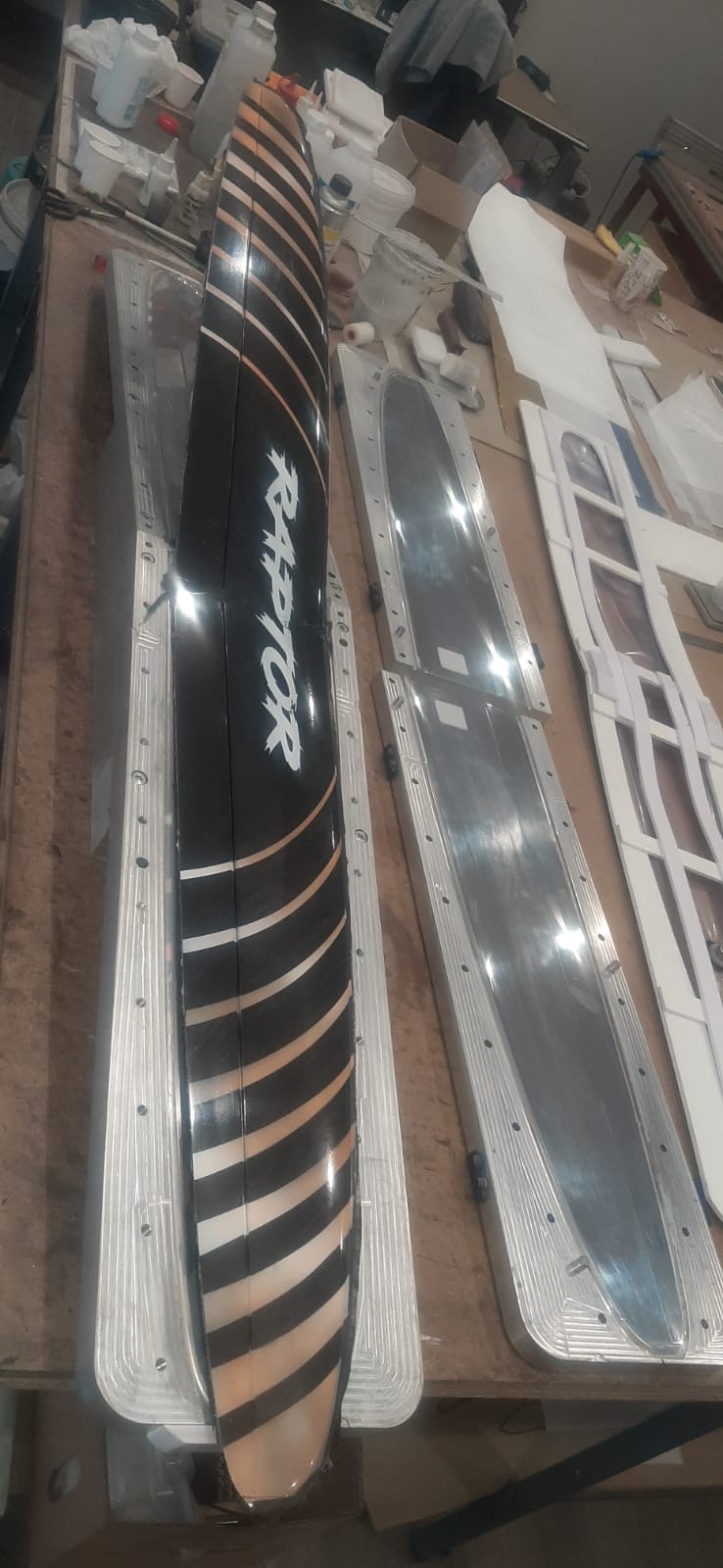
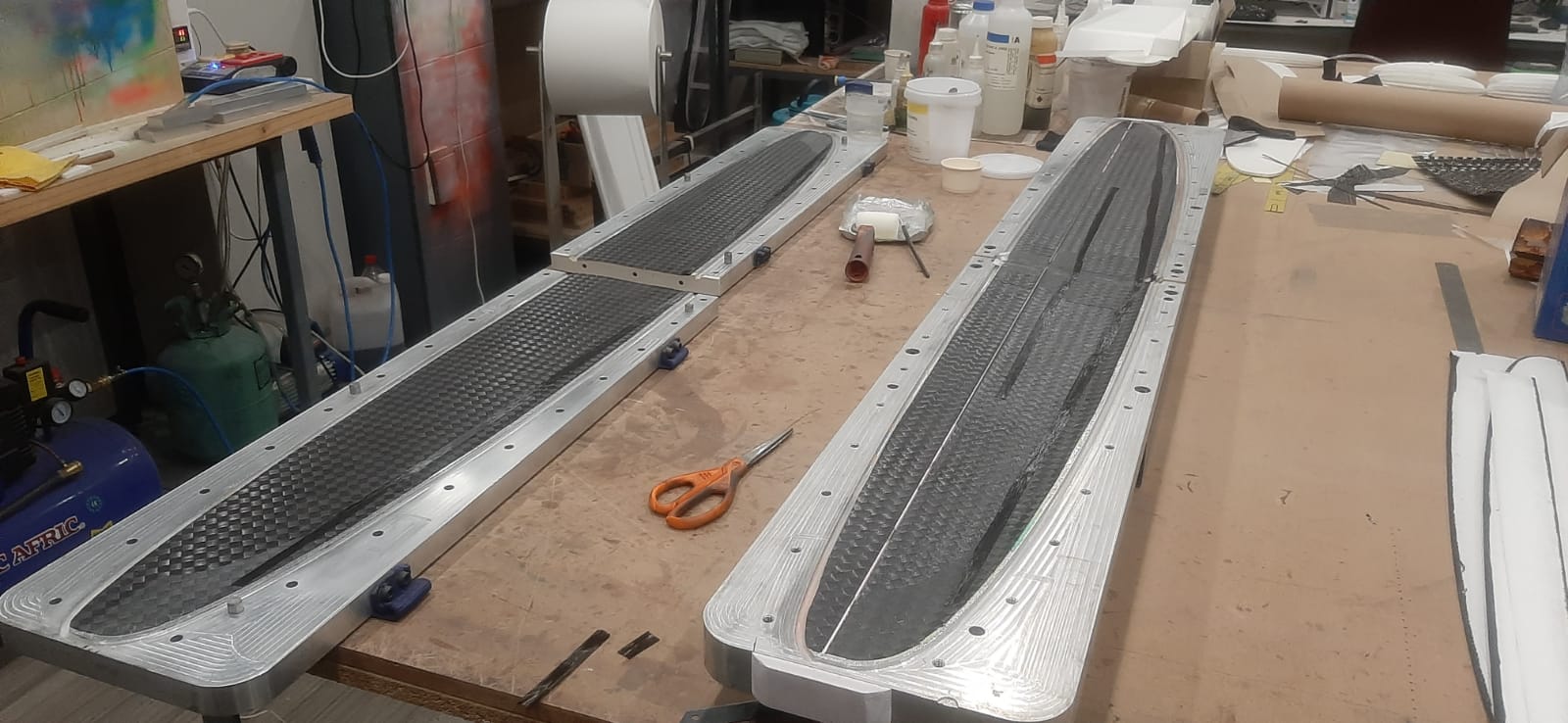
You can see the characteristic weave of the carbon fibre cloth in the open molds, and the spar running down the centre line. The bench behind tells the story of a serious composite workshop — resins, hardeners, release agents, tools for cutting and rolling.
The Paint-First Process
One of the signature features of a properly made composite glider wing is that the colour and graphics are in the laminate, not painted on top. The process is inverted from what you might expect: the decorative layer goes into the mold first, face-down, and the structural carbon layers are applied on top of it. When the mold opens, the finish is already on the outside — perfectly smooth, with no post-paint sanding or coating needed.
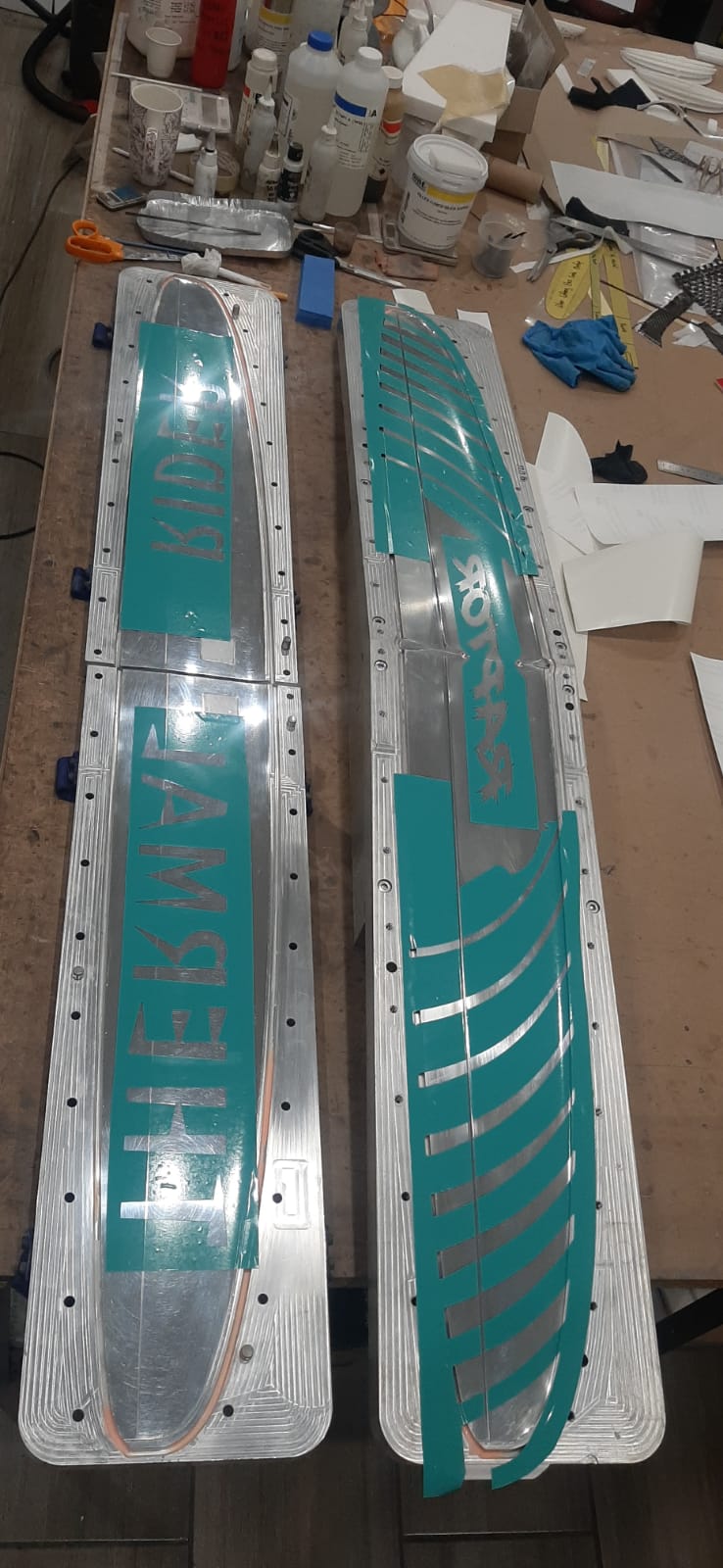
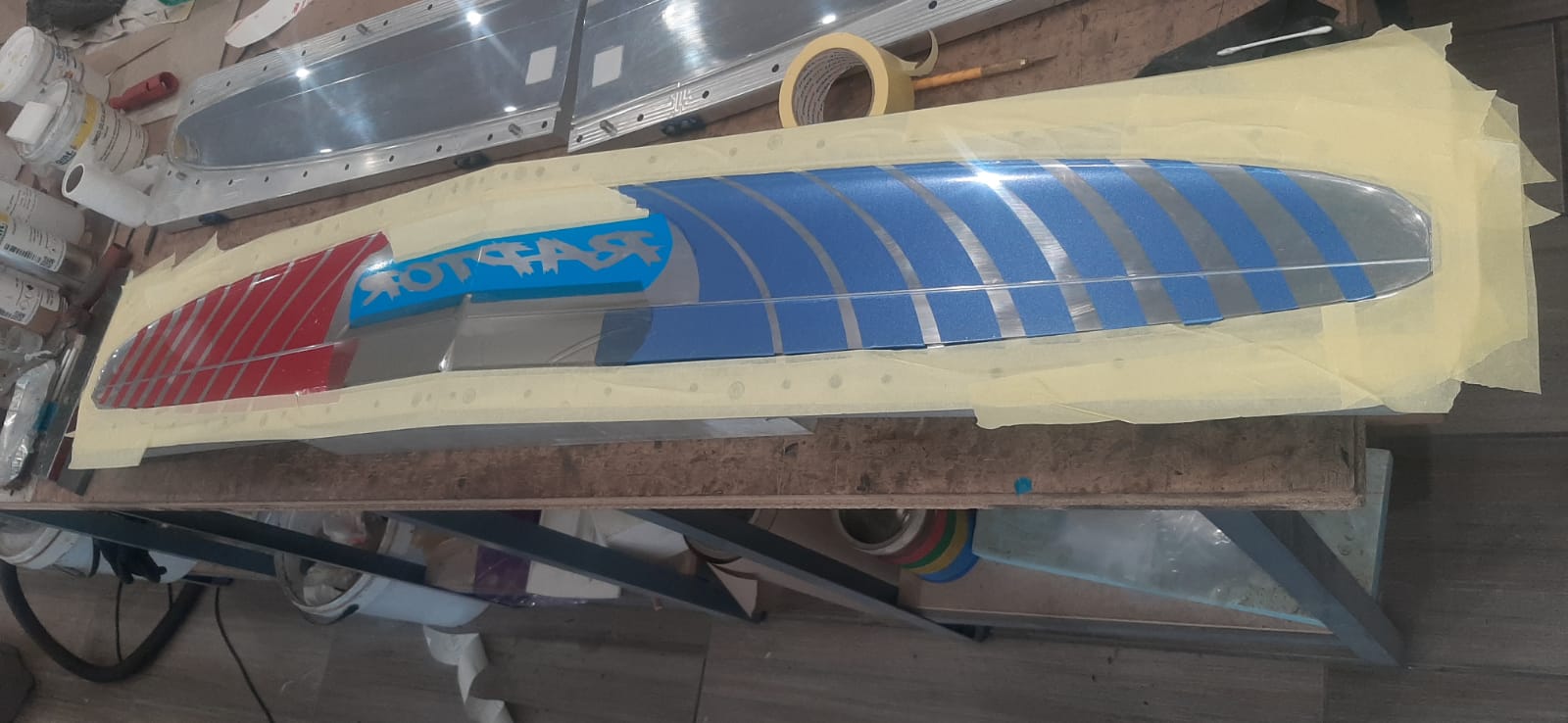
Getting this right takes real skill. The vinyl pieces must be cut precisely, laid without bubbles or misalignment, and the transitions between colours need to be sharp. Any imperfection here shows up permanently on the finished wing.
Out of the Mold
After curing — typically under pressure or vacuum to eliminate voids and consolidate the laminate — the mold opens to reveal the finished shell. The result is a wing surface with a mirror gloss that needs no further finishing.
The combination of structural integrity and aesthetic finish in one operation is what separates a properly made composite DLG from anything you’d produce with conventional covering methods. The wing is simultaneously lighter, stiffer, and more beautiful.
The Finished Gliders
The proof is in the flying — and in the smiles.
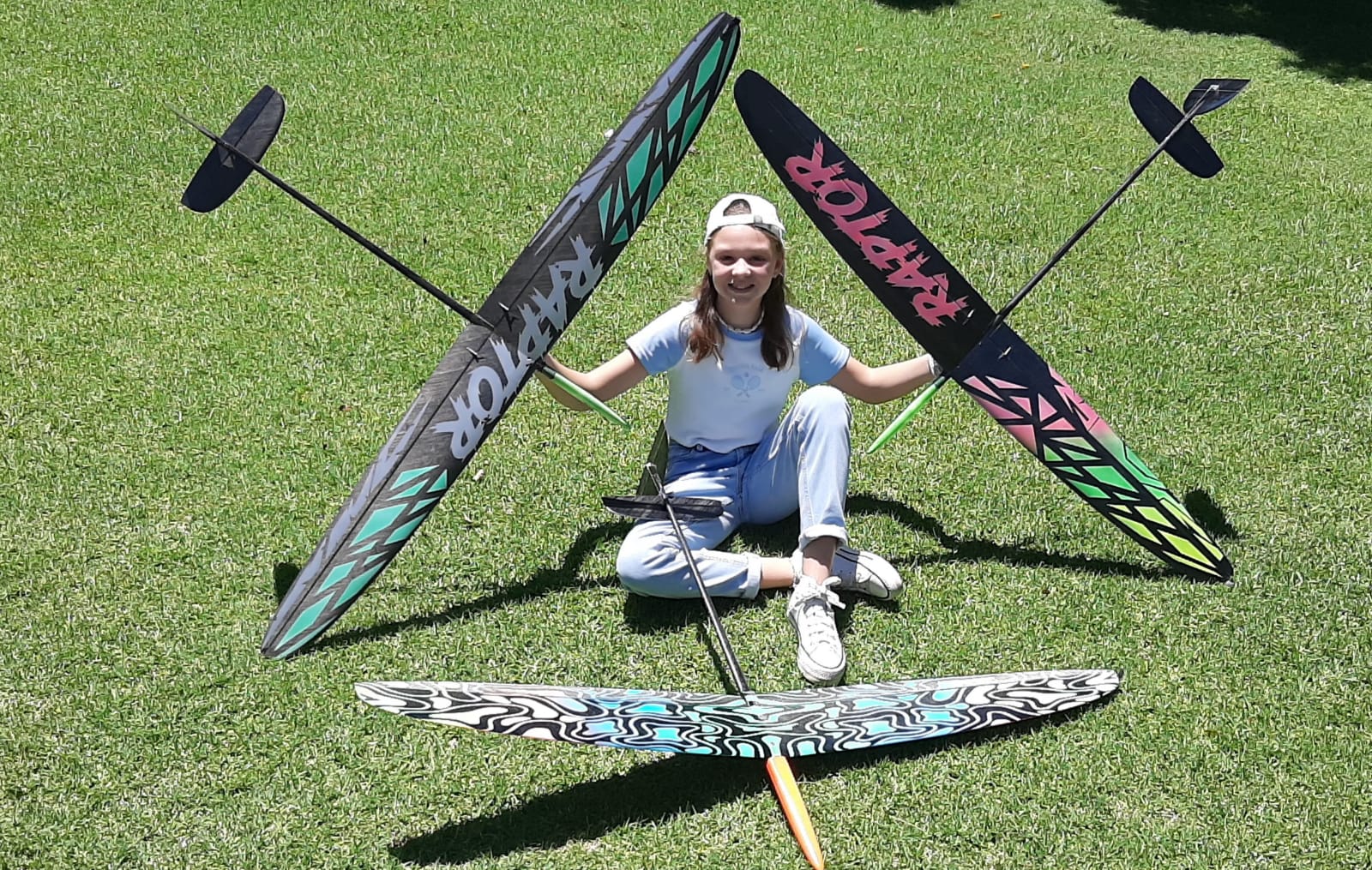
Each wing is a one-off in terms of colour scheme. The teal and black, the pink and green, the black with copper spirals, the flowing topographic-wave pattern — every glider that leaves the workshop is individually dressed. That’s not just aesthetics; it helps pilots identify their aircraft in the air during a field session.
Made in South Africa
It’s worth saying plainly: this level of composite workmanship, coming out of a South African workshop, is world-class. F3K is a demanding discipline — the gliders are thrown by hand to altitude and must sustain flight in near-zero lift conditions through pilot skill alone. The airframe has to be as good as it can possibly be.
The Raptor is exactly that.
More build details and flying reports to follow as my own Raptor (serial R1 001/23) gets finished and into the air.